
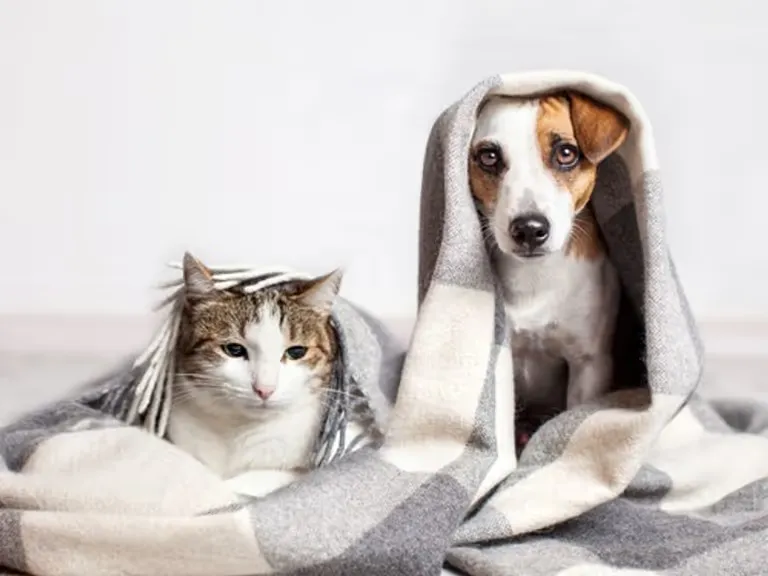
Living with a cat or a dog means living with hair on the sofa, paw prints by the back door and the occasional smell you cannot place. The instinct is to reach for something that cleans hard and smells strong. That instinct is where most pet-home mistakes begin.
Is lavender essential oil safe for cats?
No. The ASPCA lists lavender as toxic to cats, dogs and horses, naming linalool and linalyl acetate as the toxic principles and nausea, vomiting and loss of appetite as the signs. Essential oil is far more concentrated than the plant, which makes the bottle the bigger problem.
A sprig of lavender in a vase and a bottle of lavender essential oil are not the same exposure. The oil is a distilled extract, many times stronger than the plant it came from, and one spill on a cat's coat delivers more than she would meet in a garden in a season.
Three exposure routes matter in a house with a cat:
- Ingestion — she licks a spill, chews a diffuser reed, or grooms oil out of her own fur
- Skin — oil lands on the coat, or is applied deliberately, which people do far more often than they should
- Inhalation — an active diffuser puts real oil droplets into the air of a closed room
Pet Poison Helpline's guidance on essential oils and pets names citrus oils, clove, eucalyptus, tea tree, pine and turpentine, wintergreen and pennyroyal among the problem oils, and states that cats and birds are at the greatest risk. It lists drooling, vomiting, lethargy, loss of appetite and irritation of the skin, airways and mucous membranes as the signs, usually appearing within six to eight hours.
Why are cats more sensitive to essential oils than dogs?
Cats clear phenols and many plant terpenes slowly, because they carry far less of the liver enzyme that tags those compounds for disposal. The same gap is why acetaminophen is dangerous to a cat and merely risky to a dog. A dose a dog shrugs off can build up in a cat.
That does not make dogs immune. Dogs get the same drooling, vomiting and unsteadiness from a concentrated oil, and small dogs get it faster. It does mean a house with a cat needs a stricter rule than a house with only a dog, and the simplest stricter rule is to keep concentrated oils out of the rooms the cat lives in.
Birds sit in a category of their own. Their respiratory systems are extraordinarily efficient, and the ASPCA advises getting veterinary advice before using cleaning products around birds at all, because they are so sensitive to fumes.
Can I run a diffuser if I have a cat?
Happy Maids would not, and neither would most feline veterinarians. An active or nebulizing diffuser aerosolizes real oil, which settles on fur and is swallowed during grooming. If you keep one, run it briefly in a room the cat cannot enter, air the room afterward, and never leave the reservoir where it can be tipped over.
Passive reed diffusers and warmers put less oil into the air, but they leave a bowl of concentrate at counter or floor level, which is worse for a curious cat. Wax melts and plug-ins are fragrance rather than pure oil, and they are still an irritant in a closed room.
A cat with asthma, or any history of coughing, should not share air with a diffuser at all. If your cat leaves the room when the diffuser goes on, that is information rather than coincidence.
What should I do if my cat gets essential oil on her fur?
Stop her grooming it off, and do not make her vomit. Wash the area with liquid dish detergent and warm water, which is what Pet Poison Helpline recommends for skin exposure, then call your veterinarian or the ASPCA Animal Poison Control Center at (888) 426-4435. A consultation fee may apply.
Take the bottle with you, or photograph the label first. The specific oil and its concentration change the advice, and a poison-control veterinarian can only work with what you are able to tell them.
Is Fabuloso safe for dogs?
Diluted as directed and allowed to dry, it is fine around dogs — the problems come from the undiluted product and from letting a pet onto a wet floor. We work through it in our guide to using Fabuloso safely in a home with dogs.
Are Mrs. Meyer's and Method cleaning products safe for pets?
Both are reasonable choices in a home with dogs, but their scented lines carry essential oils, which makes them a poor fit for a house with cats. The full answer is in our guide to whether Mrs. Meyer's and Method are safe for pets.
What cleaning products are safe for pets?
The safest products are the dullest ones — soap and water, an enzyme cleaner for accidents — and the biggest single safety factor is letting surfaces dry before pets walk on them. We work through it in our guide to the pet-safe cleaning products worth using.
How do I make my house smell good with pets?
Remove the source rather than covering it. Pet odor lives in soft material — bedding, upholstery, rugs, the litter box and the animal's own coat — so laundering and vacuuming those on a schedule does more than any scent product, and it does it without putting oils into the air your cat breathes.
The order that works in a house with animals:
- Wash the pet's bedding weekly, on the hottest cycle the fabric allows, with unscented detergent
- Scoop the litter box daily and wash the box itself monthly with dish soap and water, not with a scented cleaner the cat will then avoid
- Vacuum with a sealed-HEPA machine, slowly, in two directions — a leaky vacuum blows fine dander straight back into the room
- Treat accidents the same day with an enzyme cleaner, saturating the pad underneath rather than blotting the surface
- Open a window for ten minutes in the morning, even in an Illinois January — nothing else exchanges air that cheaply
- Groom the animal outdoors or over a hard floor, which keeps loose coat out of the carpet in the first place
What not to do: plug-ins and aerosols in a room the cat sleeps in, scented candles beside the litter box, and simmering pots of citrus peel. Each of those adds fragrance to air that already has an odor problem in it, and citrus sits on the list of oils that trouble cats. Carpets and hard floors take the worst of it in a dog household, and we go through those separately in keeping floors and carpets clean with dogs.
What will a cleaning service do in a pet home, and what will it not?
Happy Maids cleans pet homes as a matter of routine, with sealed-HEPA vacuums, hand-washed touch points, and floors mopped into the corners and along the edges where hair collects. There are limits, and they are better known before the first visit than after it.
Happy Maids does not:
- Remove animal waste
- Clean a home with a flea infestation, for the sake of the crew and every other home they visit that day
- Shampoo or steam-clean carpet or upholstery — that is a carpet cleaner's trade and a different machine
- Work above a two-step ladder, so fixtures out of reach stay out of reach
Happy Maids also asks that anxious or protective animals be secured during a visit, and reserves the right to leave if a cleaner feels threatened. That is not a judgment about your dog. It is how the same two people come back to your home for years without an incident. The full terms sit on the policies page.
On products, there is nothing to request. Green, kid- and pet-safe products are the default on every visit, not an upgrade you have to ask for or pay extra for, and the green cleaning page lists what the crew carries. If one surface or one animal in your house needs something particular, say so before the visit rather than on the day.
Supplies come with the crew. If you ask them to use products of your own instead, Happy Maids cannot promise its usual result and cannot take responsibility for what an unfamiliar product does to a surface.
Where to go from here
If the problem is hair and dander week to week, that is a maintenance problem, and a recurring house cleaning rhythm is what solves it. If the house has got away from you, a deep clean resets it and a recurring plan holds it there. The room-by-room checklist shows exactly what happens on each, task by task.
Happy Maids has served Barrington, Deer Park and the surrounding Northwest suburbs since 1985. Call 847-382-0082 and a person will answer.
Frequently asked questions
Is lavender essential oil safe for cats?
No. The ASPCA lists lavender as toxic to cats, dogs and horses, with linalool and linalyl acetate as the toxic principles and nausea, vomiting and loss of appetite as the signs. Essential oil is a concentrated extract, so it carries more risk than the plant. Keep it out of rooms your cat uses.
Is Fabuloso safe for dogs?
Used the way the label directs — diluted, on a sealed hard floor, and dry before the dog walks on it — the risk is low. The ASPCA states most cleaning products are safe around dogs and cats when used per labeled directions. The real hazards are the undiluted concentrate, a wet floor, and unrinsed bowls or crates.
Are Mrs. Meyer's cleaning products safe for pets?
Mrs. Meyer's holds no pet-safety certification, because none exists for household cleaners in the United States. The formulas are plant-derived surfactants plus strong signature fragrances, several of them built on essential oils. In a cat home, choose fragrance-free versions and rinse any surface the cat contacts.
Are Method cleaning products safe for pets?
Method makes the same plant-derived, fragranced type of product, and the "non-toxic" wording on the label is the company's own rather than a regulated claim. Check whether the specific product appears on the EPA Safer Choice list, prefer fragrance-free, and keep pets off surfaces until they dry.
What cleaning products are safe for pets?
Liquid dish soap and warm water covers most of a pet home. An enzyme cleaner handles urine, dry baking soda handles odor in soft material, and diluted white vinegar handles glass and sealed hard floors. Keep one registered disinfectant for after illness, and store every concentrate above nose height.
Can I use an essential oil diffuser if I have a cat?
It is better not to. An active diffuser aerosolizes real oil that settles on fur and is swallowed during grooming, and cats process those compounds slowly. If you keep one, run it briefly in a room the cat cannot enter, air the room afterward, and never leave the reservoir accessible.
My cat licked a cleaning product. What should I do?
Do not induce vomiting. If oil or product is on her coat, wash the area with liquid dish detergent and warm water so she cannot groom it off, then call your veterinarian or the ASPCA Animal Poison Control Center at (888) 426-4435. A consultation fee may apply. Have the label to hand.
Will Happy Maids clean up after my pets?
Happy Maids cleans pet homes routinely, with sealed-HEPA vacuums and floors mopped into the edges where hair collects. It does not remove animal waste, cannot clean a home with a flea infestation, and does not shampoo or steam-clean carpet or upholstery. Anxious or protective animals should be secured during the visit.