
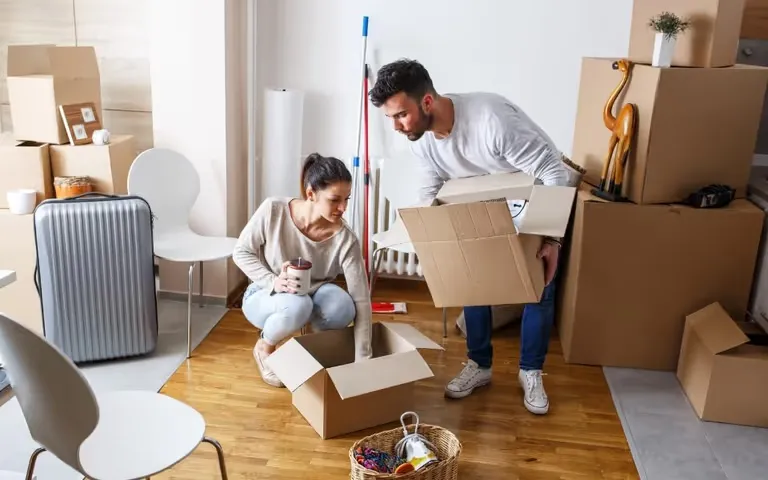
There is a specific moment in every move when the question arrives. The truck has not come yet, the rooms are empty and echoing, you open a kitchen drawer to check the space - and it is full of crumbs from somebody you have never met.
What follows is the honest answer to what people search for at that exact moment: whether the place was supposed to be clean, what happens if it is not, and what is genuinely worth cleaning before the boxes come in. Happy Maids has cleaned homes in Barrington and the surrounding towns since 1985, and move-in is the visit most people book a day too late.
Should a house or apartment be clean when you move in?
It should be, and often it is not. A property management company usually turns a unit between tenants, and a home sale contract usually calls for the property to be left in broom-clean condition - but broom-clean is a low bar, and neither standard covers inside cabinets, inside appliances, or anything that has to be opened.
Broom-clean is worth understanding precisely, because it is the phrase most contracts actually use. It means the belongings and the debris are gone and the floors have been swept. It does not mean the shower has been scrubbed, the refrigerator has been wiped out, or the bathroom cabinet has been emptied of somebody else's medication.
So the realistic expectation is: the house will look empty and reasonably tidy, and it will not be clean in the sense you mean when you say clean.
Does a landlord have to clean before you move in?
A landlord has to deliver the unit habitable, which is a lower bar than clean, so a move-in clean is usually the tenant's decision rather than the landlord's obligation. The full answer is in our guide to whether a landlord has to clean before you move in.
What should you clean first when you move into a new house?
Clean the things you cannot reach once furniture and boxes are in the way, and the things that touch food, skin or bare feet. In order: inside cabinets and drawers, inside the refrigerator, the bathrooms, the floors wall to wall, and every touch point - switch plates, handles, door frames, handrails.
The whole logic of a move-in clean is access. An empty house is the only time in your occupancy when the back of a closet shelf, the gap beside the range and the corner of the kitchen floor under where the table will go are all reachable in the same afternoon.
The list worth doing before a single box comes in:
- Inside every cabinet, drawer and closet. Your dishes, food and clothes go in these. They are also the surfaces the last occupant was least likely to have cleaned.
- Inside the refrigerator and the oven. Both are unpleasant jobs and both get much harder once the kitchen is in use.
- Bathrooms, completely. Shower and tub, glass and track, toilet base to lid including behind the pedestal, medicine cabinet inside, and the floor behind the toilet.
- Touch points. Switch plates, door handles, door frames, handrails, and the wall area around every light switch.
- Cobwebs, vents, registers and fan blades. Ceiling fans in particular - the first time you switch one on, whatever is on the blades comes down on the room.
- Floors, wall to wall. Vacuumed into corners and closets, then mopped where the floor is hard. This is the only day it will be this easy.
What does a move-in clean consist of?
A move-in clean is the full room-by-room checklist run at a hand-washed standard in an empty home: cobwebs and vents, light fixtures and switch plates, blinds, sills and trim, doors and frames, baseboards, showers and toilets, counters and sinks, mirrors, and floors vacuumed then mopped edge to edge.
What an empty home adds is everything that is normally blocked. Closets go back to bare - shelves, rods, trim and the floor along the back wall. The gaps beside and behind the range, refrigerator, washer and dryer get reached. Doors, frames and baseboards get hand-washed through the whole house rather than dusted.
Several of the items people most associate with a move-in are add-ons rather than standard inclusions, and Happy Maids says so rather than burying it. Inside the oven, inside the refrigerator, inside emptied cabinets, interior windows within step-ladder reach, vacuuming inside the sofa, and cleaning a finished basement are each requested separately - and on a move, nearly everyone takes them. Add-ons need at least one business day of notice.
There are also things a maid service does not do at all, which is worth knowing before you build your plan around them. Carpet and steam cleaning is a separate trade. So is exterior window washing. Washing walls and ceilings, hauling debris, and anything above a two-step ladder are published exclusions on the Happy Maids policies page. The complete task list, with add-ons marked, is on the house cleaner checklist.
How much does a move-in cleaning service cost?
A move-in clean is priced by the time it takes rather than as a flat rate. Happy Maids charges move-in, move-out, deep and post-remodel cleaning hourly and pro-rates every ten minutes, so the total follows the size of the home, the condition the last occupant left it in, and which add-ons you choose.
Condition is the variable nobody can see in advance, which is why an honest quote for a move-in starts with a conversation rather than a square-footage calculator. A house that was cleaned regularly until the day it sold and a house that was not are two different jobs at identical size.
Call 847-382-0082, describe the home and what you found when you walked it, and the office will give you an estimate and a realistic window. The move-out pricing and timing breakdown explains the same hourly structure in more detail, and it applies to both ends of a move.
Why is a move-in clean usually bigger than a move-out clean?
Because you are the one who has to live in it. A move-out clean is judged by a walk-through; a move-in clean is judged by opening the cabinet you are about to put your plates in. The standard is higher on the move-in end even though most people budget for the opposite.
The other reason is inheritance. On a move-out you are cleaning your own dirt, which you already know the extent of. On a move-in you are cleaning somebody else's, and the surprises are always in the closed places - the drawer runners, the inside of the medicine cabinet, the underside of the range hood.
If you are handling both ends of the same move, the tenant side of the move-out question covers what your old lease is likely to require, and why a move-in clean is worth doing before you unpack covers the case for booking the new place first.
Should you wash the walls or trim in a newly painted home?
Not right away. Fresh paint needs at least two weeks to cure before it is washed, and latex can want a full month. Wiping it before then can burnish the sheen, lift the film, or leave marks that only show once the light hits it. In a new build or a freshly repainted resale, dust the walls and leave the washing until later.
Benjamin Moore's own guidance on cleaning painted walls is to wait at least two weeks before newly painted walls are dusted or cleaned, and it warns against glass cleaner and heavy-duty spray cleaners on paint entirely, because the solvents in them damage the finish. It also notes what most people get backwards: flat, matte and eggshell finishes need a gentler touch than semi-gloss and gloss, not the same one.
Two weeks is the floor rather than the target, and trim is the part to be most patient with. That guidance is written about walls, and the enamel that most trim and doors carry cures more slowly than wall latex, so the safe assumption in a new build is closer to a month.
Two practical consequences for a move-in:
- Skip the melamine foam eraser on trim and doors. It is a fine abrasive, and on the semi-gloss finish most trim carries it polishes the sheen off in patches you will notice for years.
- Ask the builder or seller when the painting was actually finished, and count from that date rather than your closing date - two weeks is the earliest, not the target.
Washing walls and ceilings is a published exclusion for Happy Maids in any case. Walls get spot attention around switch plates and handles, where hands land, and the rest is a painter's or a wall-washing specialist's job.
Does a move-in clean make the air in a new home better?
It removes the settled dust that gets re-suspended every time someone walks through, which is a real and limited benefit - not a cure for anything. The EPA is clear that indoor air quality has multiple sources, including building materials, furnishings, moisture and ventilation, so cleaning is one lever among several.
The EPA's introduction to indoor air quality lists building materials, cleaning products, HVAC systems and excess moisture among the sources, and notes that when too little outdoor air enters, pollutants accumulate. That is why the two most useful things to do in a house you have just taken over are unglamorous: change the furnace filter, and open the windows.
Happy Maids vacuums with sealed-HEPA machines, which keeps fine dust in the machine rather than putting it back into the room, and works high to low so that what comes off the fan blades ends up on a floor that has not been done yet. That is the honest scope of what a cleaning visit contributes.
When should you schedule a move-in clean?
Schedule it for the day after you take possession and before the movers arrive - one or two days ahead of the move-in date is the sweet spot. An empty home cleans faster and cleans better, and every box already in a room is a room that has to be cleaned around instead of straight through.
If the sequence cannot work that way, the next best option is to have the kitchen and bathrooms done first and let the rest follow. Those two rooms carry most of the value and most of the hours in any move-in clean.
A few things worth arranging in advance:
- Confirm utilities are on - hot water and lighting change how much can actually be done
- Request add-ons at least one business day ahead, particularly inside the oven and inside the refrigerator
- Empty the refrigerator and finish any self-cleaning oven cycle at least 24 hours before the visit
- Tell the office about a finished basement, which is effectively another floor of the house
If something is missed, Happy Maids re-cleans that area at no charge - tell the office within two business days of the visit and it gets scheduled. Details of the service are on the move-in and move-out cleaning page, and if you plan to keep the new house in the condition you find it, a recurring housekeeping plan holds that standard for less than repeating a one-time clean.
Happy Maids cleans across Barrington, Lake Zurich, Palatine, Inverness, Long Grove and the surrounding towns listed on the service areas page. To book a move-in clean or get an estimate, call 847-382-0082.
Frequently asked questions
Should an apartment be clean when you move in?
It should be, and often it is not. Management companies usually turn a unit between tenants and sale contracts usually call for broom-clean condition, but broom-clean only means belongings and debris gone and floors swept. It does not cover cabinet interiors, appliance interiors, or anything that has to be opened.
Does a landlord have to clean before you move in?
A landlord is generally required to deliver a habitable, reasonably clean unit, and most leases commit to a turn clean between tenants. That duty is about condition and safety rather than detail, and rarely reaches cabinet interiors, oven interiors, blinds, vents or the inside of the refrigerator. Standards vary by municipality and by lease, so read yours.
What should you clean first when you move into a new house?
Clean what you cannot reach once boxes are in the way, and what touches food, skin or bare feet: inside cabinets and drawers, inside the refrigerator, the bathrooms completely, every touch point, cobwebs and fan blades, then floors wall to wall. Do it before a single box comes in.
What does a move-in clean consist of?
The full room-by-room checklist at a hand-washed standard in an empty home - cobwebs, vents, fixtures, switch plates, blinds, sills, trim, doors, frames, baseboards, showers, toilets, counters, sinks, mirrors, floors mopped edge to edge - plus closets and appliance gaps that furniture normally blocks.
How much does a move-in cleaning service cost?
It is priced by time, not as a flat rate. Happy Maids bills move-in, move-out, deep and post-remodel cleaning hourly and pro-rates every ten minutes, so the total follows home size, the condition the last occupant left it in, and the add-ons chosen. Call 847-382-0082 for an estimate.
Are inside the oven and inside the refrigerator included in a move-in clean?
They are add-ons rather than standard inclusions, along with inside emptied cabinets, interior windows within step-ladder reach, vacuuming inside the sofa and cleaning a finished basement. On a move nearly everyone takes them. Add-ons need at least one business day of notice.
Should you wash the walls in a newly painted or new-build home?
Not right away. Fresh paint needs at least two weeks to cure before washing, and up to four, so wiping it sooner can burnish the sheen or lift the film. Trim is usually enamel and cures more slowly than wall latex. Dust only until then, and never use glass cleaner or heavy-duty spray cleaner on paint.
When should you schedule a move-in clean?
One or two days after you take possession and before the movers arrive. An empty home cleans faster and better, and every box already in a room is a room that gets cleaned around instead of straight through. Confirm the utilities are on first.