
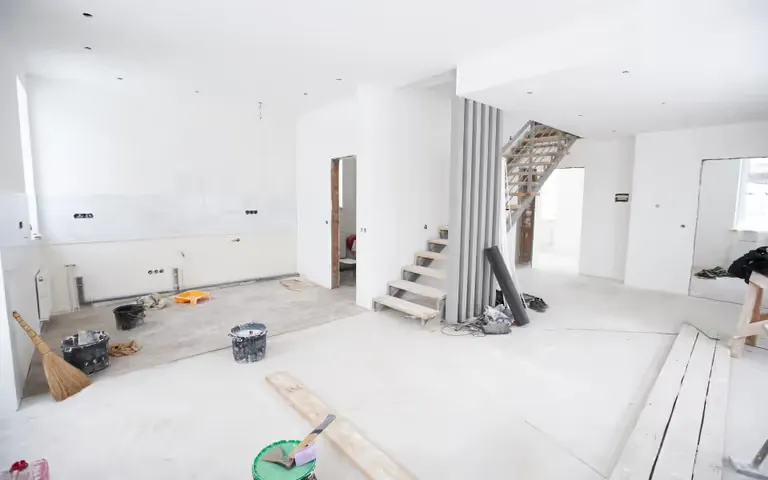
Drywall dust is not house dust. It is talcum-fine, it travels on air rather than on feet, and it is mildly abrasive — which is why the wrong method grinds it into a finish that is only days old.
How do you clean up drywall dust?
Clean drywall dust dry first, then damp. Wait a day for airborne dust to fall, shut the heating and cooling off, then vacuum from ceiling height down to the floor with a sealed-HEPA machine. Only after that dry pass should a barely damp microfiber cloth touch anything. Wet first turns dust into paste.
That single rule — dry before wet — is what separates a room that comes clean from a room that stays hazy. Joint-compound dust mixed with water is a thin slurry, and slurry dries as a film inside the grain of paint, trim and cabinet finish. A second wipe spreads it rather than lifting it.
The full sequence, in order:
- Wait a day after the last tool goes down. Fine dust is still falling out of the air. Clean into it and you are cleaning twice.
- Shut the HVAC off and open a window. Every time the blower cycles it pulls dust out of the returns and puts it back on what you just finished.
- Vacuum high to low. Tops of doors, window frames, trim, shelves, vent covers, then furniture, then floors last. Soft brush head, light passes — pressing hard packs the dust into the surface instead of lifting it.
- Then damp-wipe, never wet. The cloth should leave no standing water. Rinse in a separate bucket and change the water the moment it turns milky, or you are painting the dust back on.
- Change the furnace filter when you are finished. It is the cheapest part of the job and the part almost everyone skips.
Three things quietly make it worse, and all three are common: a broom, a feather duster, and a leaf blower or compressed air used indoors. Each of them lifts the fine fraction back into the air, where it hangs for hours and lands again overnight.
One more, and it is expensive: do not tip drywall rinse water down a sink, tub or floor drain. Gypsum slurry sets in a trap the way it sets in a bucket. Let the bucket settle outside, pour off the clear water, and bin the sludge.
How long does it take for drywall dust to settle?
The visible dust settles within a few hours of the sanding stopping. The fine fraction takes far longer, because particles that small stay suspended, and any air movement re-lifts them. In practice, a day or two after the last tool goes down is the right time to clean.
This is also why one pass is rarely enough. Dust that was still airborne on cleaning day is on your surfaces the next morning, and the heating system keeps feeding a little more back for a week or so afterward. We wrote about that resettling problem at more length in creating a dust-free home after renovations.
How do you clean drywall dust off walls?
Take drywall dust off walls dry. Vacuum from the ceiling down with a soft brush head, or run a clean, dry microfiber flat mop on a pole across the wall in overlapping passes. Damp-wiping is only safe on paint that has fully cured, and fresh paint has not.
New latex needs roughly two to four weeks to cure. Wiping it before then — even barely damp, even gently — burnishes the surface and leaves shiny patches that do not come out and cannot be touched up invisibly. If the walls were painted in the last month, take the dust off dry and stop there.
- Work top down, in overlapping vertical passes. Anything you miss falls onto wall you have already done.
- Swap the cloth or pad often. A loaded microfiber stops collecting and starts smearing, and you will not notice until the light changes.
- Keep melamine sponges away from it. A magic-eraser sponge is a fine abrasive. On semi-gloss, gloss, or any paint less than a month old it removes sheen in a visible patch.
- Do the trim and baseboards separately. Dust slides down and collects on the top edge of every horizontal run, which is the one place people wipe last and should wipe first.
Worth saying plainly: washing walls and ceilings is not part of any Happy Maids service, on a post-remodel visit or any other, and nothing above a two-step ladder is within reach. On a post-remodel visit Happy Maids takes fine dust off what is within that reach — trim, doors, frames, sills and vent covers — dry first, with sealed-HEPA suction. Full wall-washing and high stairwell work belong to a specialist, and we will say so rather than attempt it.
Do I need to clean drywall dust before priming?
Yes. Primer will not bond through a layer of sanding dust — it lifts as the roller passes, leaves a gritty, patchy film, and that film is what peels a year later. Remove the dust dry: vacuum the wall with a brush attachment, then go over it with a dry microfiber or a tack cloth.
Do not wash bare drywall. Water raises the paper nap on the facing and softens the joint compound you just spent a weekend sanding flat, and both problems show through the finish coat.
- Vacuum the wall, the floor, and the ceiling line before you open a single can. Dust on the floor gets kicked back up onto wet paint.
- Use a dry microfiber or tack cloth as the second pass — never a damp sponge, and never a wet rag.
- Check in raking light. Hold a work light flat against the wall; dust and sanding ridges you cannot see head-on show up immediately.
How do you clean drywall dust off floors?
Vacuum before anything else, with the beater bar off and a soft floor head on. Drywall grit is abrasive, so a dust mop or a wet mop pushed across an unvacuumed floor drags it over the finish like fine sandpaper. Only once the grit is gone should a damp mop touch the floor.
Do the edges, corners and the gap along the baseboards first. Grit collects there, and a mop head run down the middle of a room will pull it straight back out.
- Hardwood. Vacuum thoroughly, then damp-mop with a barely wet flat mop and change the pad often. If the floor was refinished as part of the remodel, ask the finisher when wet cleaning is allowed and follow that date — a curing finish and water do not mix, and no general rule beats the person who applied it.
- Tile and stone. Vacuum, then mop with plenty of clean water changed frequently. Cloudy grout haze left by a tile setter is a separate problem with its own products, and acidic haze removers can etch natural stone and damage new grout — that is a question for your tile installer, not a mop.
- Vinyl and laminate. Vacuum first, then damp-mop. These finishes scratch easily and show it under low light, so the vacuum pass matters more here than anywhere.
- Concrete, in a basement or garage. Vacuum with a fine-dust filter fitted, then mop, then expect to do it again. Concrete is porous and holds the dust in the surface, so the second pass is the one that actually clears it.
- Carpet. Slow, repeated passes in more than one direction, with a sealed-HEPA machine. The dust is deep in the pile and a fast pass only takes the top layer.
Before you slide furniture back into place, check the felt pads underneath it. A single piece of grit caught under a pad is what leaves an arc across a new floor.
Can you use a regular vacuum on drywall dust?
No. A household vacuum's filter is built for lint and crumbs, not for particles this fine. The dust passes straight through the filter and out the exhaust, so the machine sprays it back into the room under pressure — and the load clogs the filter and can burn out the motor on the way.
What actually holds it:
- A sealed-HEPA vacuum. The word doing the work is sealed. A HEPA filter inside a body that leaks air around the seams lets fine dust out anyway.
- A shop vacuum with a fine-dust or drywall bag fitted. An empty shop vacuum with no fine-dust bag behaves exactly like the household one.
- A bag rather than a bin you tip out. Emptying a canister of drywall dust puts most of it straight back into the air you were trying to clear. If you must empty a bin, do it outside and away from open windows.
Happy Maids runs sealed-HEPA vacuums on every visit, which is the difference between removing fine dust and relocating it.
Is drywall dust harmful to breathe?
Drywall dust irritates the eyes, nose, throat and lungs, and the silica in joint compound is the part health agencies take seriously, so a mask and ventilation matter during clean-up. The full answer is in our guide to whether drywall dust is harmful or toxic.
What is post-construction cleaning?
It is the detailed clean that follows building work — fine dust off every surface, vents and registers, sticker and label removal — once the contractor has swept and hauled the debris away. The full answer is in our guide to what post-construction cleaning is and what it covers.
When is this worth handing over?
When the dust reached rooms nobody worked in, when there is new hardwood you are afraid of scratching, or when the remodel ran long and company is arriving. Happy Maids has been doing post-remodeling cleaning in the Barrington area since 1985, and the honest scope is worth knowing before you call.
- The house must be broom-swept by your contractor first, with all construction debris hauled away. Happy Maids cleans homes; we do not clear job sites.
- Inside the oven, inside the refrigerator and inside cabinets are add-ons, requested at least one business day ahead. After a remodel nearly everyone takes them, because new cabinets arrive full of sawdust and packing grit.
- Interior window washing is an add-on as well, within step-ladder reach and requested at least one business day ahead. Sills and tracks are dusted as part of the dry pass. Exterior glass is a window washer's job.
- Nothing above a two-step ladder, and no wall or ceiling washing, on this service or any other.
- Priced by the time the house actually takes — post-remodel work is hourly and pro-rated in ten-minute increments, rather than a flat package, because no two remodels leave the same mess.
Call 847-382-0082 and describe what was built and which rooms it reached. A real person answers during office hours, the estimate is free, and we will tell you honestly what is in scope and what is not. Our full terms, including how damage is handled, are on the policies page, and you can check whether we cover your town on the service areas page.
Many clients fold the follow-up into the first visit of regular house cleaning rather than booking a separate return, which is usually the better value once the dust has finally stopped falling.
Frequently asked questions
Is drywall dust toxic?
Drywall dust is not toxic in the sense of a poison. The gypsum and mineral fillers in ordinary joint compound are not poisonous. The problem is physical rather than chemical: the particles are fine enough to reach deep into the airway, and they irritate eyes, nose and throat on contact. Where tile, brick or concrete was also cut, the same dust can carry respirable crystalline silica, which is a different and more serious matter.
Can drywall dust make you sick?
It can make you feel unwell while the exposure lasts. The common complaints are a dry, scratchy throat, a persistent cough, a blocked or running nose, and gritty, stinging eyes, and they usually ease once the dust is gone and the air has cleared. Anyone with asthma, COPD or another respiratory condition should stay out of the house until the dry cleaning pass is finished, and should talk to their physician rather than to a cleaning company.
How long does drywall dust stay in your lungs?
We are cleaners, not doctors, so treat this as general information. The airways clear most inhaled mineral dust over a period of days through mucus and coughing, which is why irritation from a one-off cleanup fades once the exposure stops. Respirable crystalline silica is the exception, because it is not cleared and accumulates with repeated occupational exposure. If symptoms persist after the house is clean, see a physician.
Can drywall dust cause cancer?
Ordinary gypsum joint-compound dust is not classified as a cancer-causing substance. The cancer concern in construction dust is respirable crystalline silica, produced by cutting, grinding or drilling tile, concrete, brick and mortar, which OSHA links to lung cancer after repeated occupational exposure over years. Cleaning up after one home remodel is not that kind of exposure, and a fitted N95-type mask lowers it further.
How do you clean up drywall dust without a shop vac?
Rent one, or borrow one, before you improvise. If that is genuinely not possible, work entirely dry and slowly: a dry microfiber flat mop on a pole for walls and ceilings, dry microfiber cloths folded and refolded to a clean face for surfaces, and a dry dust-mop pass on hard floors with the windows open. Never a broom and never a household vacuum, and be ready to repeat it for several days.
How do you clean drywall dust off concrete floors?
Vacuum the concrete first with a fine-dust bag or filter fitted, working edges and corners before the open floor, then mop with plenty of clean water changed often. Concrete is porous, so the dust sits in the surface texture and a single pass will look clean while still dusting off on a shoe. Plan on two or three passes over a couple of days, and never dry-sweep it.
How many cleanings does it take to get rid of construction dust?
Usually more than one. A thorough post-remodel clean removes what has already landed, but fine dust keeps falling out of the air and out of the heating system for days, so a light gritty film often reappears on flat surfaces within a week. Changing the furnace filter right after the clean, and again a few weeks later, shortens it more than any extra scrubbing does.
How much does post-construction cleaning cost?
Post-remodel work is priced by the time the house actually takes, hourly and pro-rated in ten-minute increments, so Happy Maids quotes each one rather than publishing a package price. What moves it: the square footage and how many rooms the dust reached, what was built, and whether the contractor has already cleared the debris. Call 847-382-0082 and we will give you a real figure, free and with no obligation.