
Hard water stains are mineral, not dirt. That single fact changes everything about how you get them off, because scrubbing a mineral deposit harder does almost nothing.
The abrasive pad that finally seems to be working is usually scratching the surface, and every scratch gives the next round of buildup something to grip. Happy Maids has cleaned bathrooms across the northwest suburbs since 1985, and the water changes street to street. Below is the method that actually works, surface by surface, along with the honest part about how long it takes.
How do you remove hard water stains?
Hard water stains dissolve in a mild acid, not in scrubbing. Wet the deposit with white vinegar or a citric acid cleaner, keep it wet for 20 to 30 minutes, then wipe and rinse. Repeat on heavy buildup rather than pressing harder. Drying the surface afterward is what keeps it from returning.
The white crust on your glass, faucet or toilet is calcium and magnesium left behind when a water droplet evaporated. Those minerals are alkaline, which is why an acid dissolves them and a general-purpose spray does not.
Penn State Extension classifies anything above 10.5 grains per gallon as very hard water. The Village of Barrington pumps its own wells at roughly 23 grains per gallon, and the private wells out toward Barrington Hills, North Barrington, Kildeer and Deer Park are hard enough to bring iron along with the mineral.
Towns on treated Lake Michigan water — Arlington Heights, Palatine, Park Ridge, Schaumburg — run closer to 8 grains per gallon. Crystal Lake is its own case: the City's 2025 water quality report puts delivered hardness at roughly 2 to 8 grains per gallon depending on which treatment plant feeds your street, so two houses ten minutes apart there genuinely have different shower glass.
That spread is not trivia. It decides whether you are mostly fighting chalky mineral scale or mostly fighting a slick soap film, and the two want different products.
Four rules cover nearly every hard water job in the house:
- Contact time beats pressure. An acid needs 20 to 30 minutes against the deposit. Spraying and wiping immediately accomplishes nothing.
- The acid has to stay wet. Once it dries it stops working, so lay a soaked cloth or paper towel against a vertical surface instead of spraying it.
- Rinse, then dry. Rinsing removes the dissolved mineral. Drying stops the rinse water from leaving a fresh deposit as it evaporates.
- Repeat instead of forcing. Heavy buildup comes off a layer at a time. Three gentle sessions beat one aggressive one, and they leave the surface undamaged.
Acid is the wrong answer in six places, and getting this wrong causes permanent damage:
- Natural stone — marble, travertine and limestone etch on contact with vinegar. The dull spot it leaves does not come back off. That includes a stone shower threshold or curb, which usually sits directly under the glass you are treating.
- Cementitious grout — vinegar and other acids dissolve the cement over time, and unsealed grout is porous enough to hold the acid and keep reacting. Keep poultices on the glass and the fixtures, and rinse grout lines with plain water as soon as you are finished rather than letting acid sit in them.
- Anodized aluminum frames, plated hardware and door sweeps — a framed shower door is usually anodized aluminum with plated fittings and a vinyl sweep at the bottom, and prolonged acetic acid dulls and pits the anodizing and attacks the plating. Keep the poultice on the glass, off the frame and out of the track, and rinse anything the acid runs onto.
- Unlacquered and living finishes — aged brass, oil-rubbed bronze and unsealed nickel are stripped by acid.
- Anywhere bleach is present — Utah State University Extension warns against mixing bleach with ammonia, and the same caution applies to mixing bleach with an acidic cleaner. Rinse a surface thoroughly before switching products.
- Soap film with little mineral in it — on softer Lake Michigan water the glass is mostly coated in soap film, which a degreaser lifts faster than an acid does, while the acid still attacks the grout between the tiles the whole time it sits there.
What is soap scum, and is it the same thing as a hard water stain?
No. Soap scum forms when bar soap reacts with the calcium and magnesium in hard water, producing an insoluble waxy film that bonds to glass and tile instead of rinsing away. A hard water stain is pure mineral left behind by an evaporated droplet. The two need different products.
Three different problems get lumped together as hard water stains, and telling them apart saves an afternoon:
- Soap scum — dull, slightly waxy, and you can feel it with a fingertip. It releases to a degreaser, or to a mild acid given enough dwell time.
- Hard water spotting — chalky and white, purely mineral, often in droplet-shaped rings. It releases to an acid.
- Orange or brown staining — iron from a private well. Neither of the above touches it, and it needs a product made specifically for iron.
This is also why a soap-based cleaner makes soap scum worse. It adds the exact ingredient feeding the problem.
Switching from bar soap to a liquid body wash slows the film noticeably, because most body washes are detergent-based and have no fatty acid for the minerals to react with.
How do you take soap scum and mineral film off glass shower doors at home?
Work on dry glass, hold the acid against it, rinse it off, and only then reach for anything else. Lay vinegar-soaked paper towels flat against the door so nothing runs off, leave them 30 minutes, wipe with a folded microfiber cloth, then rinse with hot water and dry. Repeat weekly on heavy buildup.
The full sequence, in order:
- Check whether your glass is factory-coated first. Treated shower glass sold as low-maintenance is damaged by both acids and abrasives. Those panels get warm soapy water and a squeegee only, and the maker's care sheet overrides everything below.
- Start with dry glass. Water already on the surface dilutes the acid before it can work.
- Make a poultice. Soak paper towels or a microfiber cloth in white vinegar and press them flat against the glass. Vertical surfaces are the whole reason spraying fails.
- Keep it on the glass, off the frame and out of the track. The anodized aluminum, the plated hardware and the vinyl sweep at the bottom of the door are not the target, and acid left sitting on them dulls and pits the finish.
- Give it 30 minutes, and re-wet it if it dries. Dry acid is inert.
- Agitate gently. A folded microfiber cloth or a non-scratch white pad. Never steel wool, a green scouring pad or a powdered cleanser.
- Rinse the grout, the threshold and the frame the moment the poultice comes off. Plain water, straight away, on every grout line, any stone curb and any metal the acid ran onto. This is the step that keeps a weekly routine from quietly eating the joints and the finish.
- Rinse the glass with hot water before you reach for anything else. Baking soda and vinegar cancel each other out, so soda on acid-wet glass just fizzes and spends both agents on each other instead of on the film.
- Then, for the waxy layer, follow with baking soda on a damp cloth. Utah State University Extension describes baking soda on a damp cloth as a gentle cleanser for tubs and fiberglass, and it lifts the soap scum the acid loosened.
- Rinse again, squeegee, then dry with a clean cloth. Glass left to air-dry re-spots immediately, which is how people conclude the method did not work.
How do you clean shower glass without scratching it?
Nothing harsher than baking soda goes on glass — no steel wool, no green scouring pad, no powdered cleanser, no razor blade. Scratches are permanent, and they matter more than they look, because a scratched surface holds mineral better than a smooth one. Every scratch makes the next haze arrive faster and take longer to remove.
If a deposit will not move with acid and dwell time, the answer is another session tomorrow, not a harder pad today.
How do you clean years of soap scum off neglected shower glass?
Years of buildup come off in layers over several sessions, not in one afternoon — a weekly vinegar poultice with gentle agitation removes a measurable layer each time until the glass comes clear. The session-by-session method, and how to tell buildup from permanent etching, is in how to clean years of soap scum.
Why is hotel shower glass always clear?
Hotels have no secret product — housekeeping squeegees and wipes the glass every single day, so minerals never get long enough to bond. We unpack the whole routine, and the part worth copying at home, in what hotels use to clean glass shower doors.
How do you remove hard water stains from a toilet?
Lower the water level first, then keep an acid on the ring long enough to work. Shut the supply valve, flush, and push the remaining water past the trap with a toilet brush. Lay vinegar-soaked paper towels on the exposed ring for an hour or overnight, then work it with a nylon brush.
The waterline ring is mineral, and on well water it is mineral plus iron, which is what makes it orange-brown rather than white. A few details make the difference:
- Dropping the water level is the step people skip. A bowl full of water dilutes any cleaner to uselessness within a minute.
- Do not forget under the rim. The rinse jets scale up from the inside, and a weak or off-center flush is usually mineral in the jets rather than a failing part.
- Never mix a bowl cleaner with bleach, or use two different bowl products in the same session. A toilet bowl is a small enclosed space, and acid plus bleach gives off chlorine gas. Rinse in between.
- Pumice is a last resort, and it only stays safe while it is soaking wet. Re-wet the stick every few strokes, because a pumice stick that dries out mid-stroke starts cutting the glaze — which is easy to do on an exposed ring above the waterline. It will mark a colored or coated bowl either way, so test below the waterline where nobody looks.
- Expect two or three rounds on a ring that has been building for years.
How do you remove hard water stains from stainless steel?
Dampen a cloth with white vinegar rather than spraying, lay it over the spots for a few minutes, then rinse and dry. Buff with the grain using a dry microfiber cloth. Stainless spots because water was left to evaporate on it, so drying the surface is what actually prevents the problem.
What to watch for on stainless:
- Always work with the grain, the faint directional lines in the finish. Cross-grain marks catch light and never fully disappear.
- No scouring pads. They scratch the grain, and a scratched finish holds spotting far worse than a smooth one.
- Fingerprint-resistant and coated appliance finishes get warm soapy water only. Acid and abrasives damage the coating, and the coating is the finish.
- For a stubborn sink basin, rinse the vinegar off first, then work a baking soda paste with the grain to lift what the acid loosened. Putting soda straight onto vinegar just neutralizes both.
- Dry and buff at the end, always. A drop of mineral oil on a cloth after buffing helps a sink shed water for a week or so.
Kitchen fixtures collect a mix of mineral film and cooking grease, which is a slightly different job. There is more on that in our guide to cutting grease off kitchen cabinets and fixtures.
How do you get hard water stains off windows?
Interior window glass takes the same treatment as a shower door — a vinegar poultice, half an hour of dwell time, gentle agitation, then rinse and dry — while any pane with an applied film gets warm soapy water only. The full walkthrough is in how to get hard water stains off window glass.
How often should you clean your bathroom to keep hard water from coming back?
Squeegee the shower glass daily, clean the bathroom weekly, and give it a detailed clean every few months. Hard water needs roughly a week to lay down a film you can feel with a fingertip. Cleaning inside that window means removing a fresh deposit instead of an established one.
The habits that do the most, in order of return:
- A squeegee kept in the shower. Thirty seconds, every time, and nothing ever bonds.
- Liquid body wash instead of bar soap. Removes the fatty acid that makes soap scum possible.
- The exhaust fan run for 20 minutes after a shower. Less standing moisture on every surface.
- Chrome and stainless dried by hand. Faucets spot first because they are wet longest.
- A water softener if the house is on a private well. That is a plumbing job, not a cleaning one, and it fixes the cause rather than the symptom.
What about mold in carpet? That is a different problem
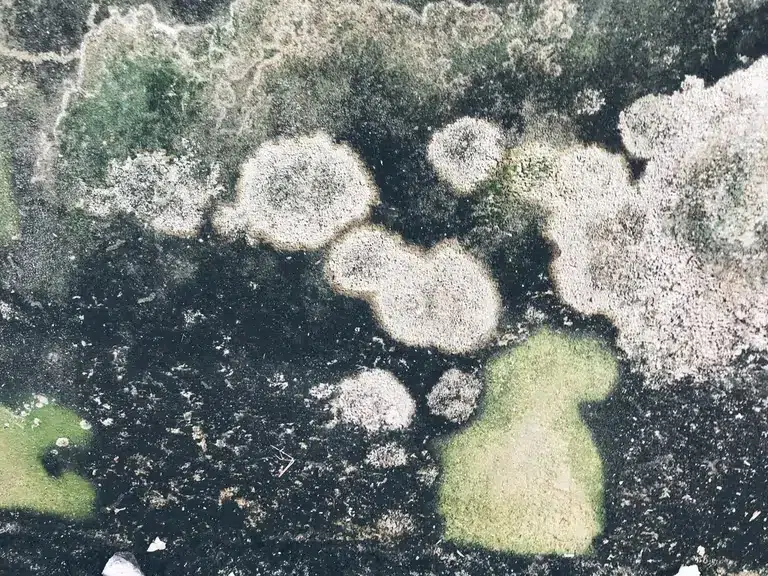
Hard water leaves white, chalky mineral. Anything dark, fuzzy or musty is mold or mildew, and none of the advice above applies to it. This page has answered the carpet-mold question for years, so here is the short, honest version.
Three things are worth knowing:
- The window is 24 to 48 hours. The EPA's guide to mold, moisture and your home says that when wet materials are dried within 24 to 48 hours of a leak or spill, in most cases mold will not grow. Getting the carpet and the pad underneath genuinely dry inside that window is the whole fight.
- Past that window, carpet usually loses. The same EPA guidance says absorbent and porous materials such as carpet may have to be thrown away once they are moldy, because growth fills the crevices and cannot reliably be removed. A carpet that stayed wet for days is a replacement job rather than a cleaning one, and the pad under it almost always is.
- A musty smell with nothing visible means look underneath. EPA treats a moldy odor with no visible source as a sign of hidden mold. On carpet that generally points at the pad or the subfloor rather than the fibers, and a deodorizer only masks it while the moisture keeps working.
Happy Maids does not do mold removal, biohazards, or carpet and steam cleaning. All three are published exclusions on our policies page, and established mold is a remediation contractor's job.
Telling you that on the phone is more useful than selling you a visit that cannot fix it.
Can a cleaning service get hard water buildup off for good?
Not as a stain-removal service, and any company promising that in one visit is overselling. Hard water and mineral stain removal is a published exclusion at Happy Maids, because it needs more than standard cleaning supplies and tools. What happens in practice is that the team cleans those surfaces with standard supplies on every visit, which takes the film down a layer at a time, and once a surface is clear regular cleaning keeps it clear.
What Happy Maids will not do is reach for an abrasive pad or an aggressive chemical to force years of buildup off in a single day. That etches glass and dulls tile permanently, and the damage never comes off. The published limits, including this one, are all on the policies page.
Every visit includes green, kid- and pet-safe products as standard, sealed-HEPA vacuums, and color-coded microfiber so bathroom and kitchen cloths never mix. Bathrooms take longer than any other room in the house, which is why they are where a cleaning service is judged.
What drives the time on your home is square footage, how many bathrooms there are, the condition at the start, and how often we come. A short call or text to 847-382-0082 gets you a real number in about two minutes, free and with no obligation.
If your bathrooms need more attention than the rest of the house, a custom cleaning plan can weight the visit that way. There is more on what the local water does to a bathroom on our house cleaning in Barrington and house cleaning in Park Ridge pages.
Frequently asked questions
Can hard water stains be removed from glass?
Yes, in almost every case. Hard water deposits sit on top of the glass rather than in it, and they dissolve in a mild acid given 20 to 30 minutes of contact time.
The one exception is etched glass. If several rounds of vinegar and dwell time change nothing at all, the mineral has pitted the surface and there is no longer a deposit to remove. That is a job for a glass polishing company or a replacement panel.
What dissolves thick limescale?
A mild acid held against it long enough to work. White vinegar, lemon juice or a citric acid cleaner dissolves the calcium and magnesium in mineral buildup, which is alkaline.
Thickness changes the timing, not the method. Lay a soaked cloth over the deposit, keep it wet for 30 minutes, agitate gently, rinse and dry. Then do it again tomorrow. Heavy buildup comes off a layer at a time, and nothing strong enough to strip it in one pass is safe on glass, tile glaze or a finished fixture.
Keep the acid where you want it. Rinse cementitious grout, any stone threshold and any metal frame or hardware with plain water as soon as you are done, because acid left sitting in a grout line dissolves the cement and acid left on anodized aluminum dulls it.
How do I clean cloudy shower glass?
Start by finding out what the cloudiness is. Tape a vinegar-soaked paper towel over one small patch, leave it 30 minutes, then wipe and compare that patch to the glass beside it. Check first that the panel is not factory-coated, because treated low-maintenance glass should never see an acid at all.
- If the patch is clearer, the glass is coated with mineral and soap film. Repeat the treatment over the whole door, weekly, until it is clear.
- If nothing changed, the glass is etched. No cleaner will fix that, and scrubbing harder only adds scratches.
How long does it take for mold to grow in a wet carpet?
Roughly 24 to 48 hours. The EPA's guide to mold, moisture and your home says that when wet or damp materials are dried within 24 to 48 hours of a leak or spill, in most cases mold will not grow.
After that window the odds turn. EPA notes that porous materials such as carpet may have to be thrown away once they are moldy, because the growth fills the crevices and cannot reliably be cleaned out, and the pad underneath holds water far longer than the carpet face does. A musty smell with nothing visible usually means the pad or the subfloor rather than the fibers.
Happy Maids does not handle mold removal, biohazards, or carpet and steam cleaning — all three are published exclusions. Established mold is a remediation contractor's job, and saying so is more useful than pretending otherwise.
What removes hard water stains from glass shower doors as a DIY job?
White vinegar and patience, unless the panel is factory-coated, in which case it gets warm soapy water and a squeegee only.
Soak paper towels in vinegar, press them flat against dry glass, leave them 30 minutes, and re-wet them if they start to dry out. Keep the poultice off the frame and out of the track, then work the panel with a folded microfiber cloth.
Rinse the grout lines, any stone threshold and the frame with plain water the moment the poultice comes off, then rinse the glass with hot water. Rinse before you reach for baking soda, because soda and vinegar cancel each other out and fizzing on wet acid spends both agents on each other. Once the glass is rinsed, a little baking soda on a damp cloth lifts the waxy soap scum layer — Utah State University Extension describes that as a gentle cleanser for tubs and fiberglass. Rinse again, squeegee, and dry with a clean cloth.
How often should you deep clean your bathroom?
Every three to four months, on top of a weekly clean. A detailed bathroom clean means the shower glass, tile and grout worked properly, the door track cleared out, and the trim, door and baseboards hand-washed rather than dusted.
Households on well water often want it more often, because buildup re-establishes faster. On a recurring plan the bathroom gets attention every visit, which is what stops a deep clean from ever being urgent.
Will vinegar damage a marble or natural stone shower?
Yes. Marble, travertine and limestone etch on contact with any acid, including vinegar and lemon juice, and the dull mark it leaves is permanent.
Use a cleaner labeled for natural stone, or plain warm water and a soft cloth, and dry the stone afterward. Check what your shower is made of before reaching for vinegar, because a cultured marble or a glazed porcelain tile behaves nothing like the real thing — and remember that the cement grout between glazed tiles is attacked by acid even when the tile itself is not.
Is the black in my shower grout mold or hard water?
Usually neither is the whole story. Hard water leaves white or chalky deposits, so anything dark in a grout line is generally mildew, and a pink or orange film is a common bathroom bacteria rather than mold.
Cleaning grout regularly and running the fan after a shower is what keeps it from getting established. Keep acids off the grout while you work, because vinegar dissolves the cement and an eroded joint holds moisture and mildew far better than a sound one.
Happy Maids does not handle mold removal or biohazards — established mold is a remediation contractor's job, and saying so is more useful than pretending otherwise.