
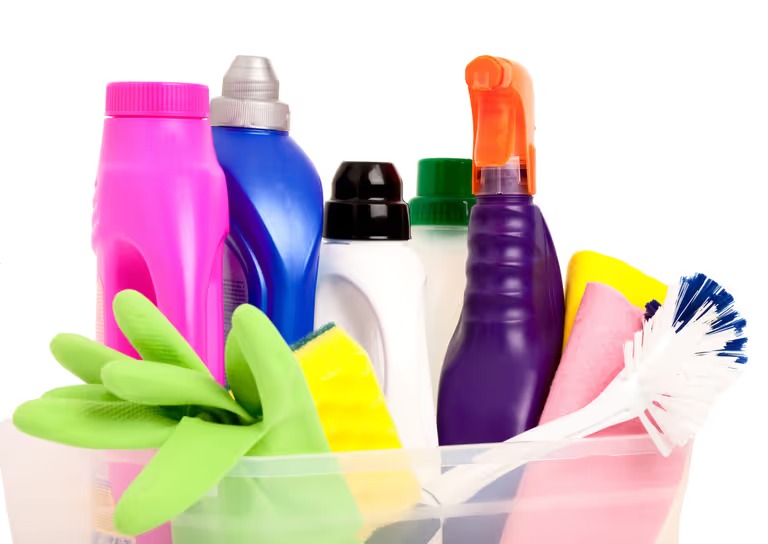
This post used to be about how a home smells after a cleaning visit. The question people actually ask is narrower and more anxious than that, and it usually gets typed into a search box late at night: whether the thing that made the house smell good is safe for the animal asleep on the floor.
Is lavender essential oil safe for cats?
Lavender oil is not safe for cats: they cannot metabolize the compounds in it the way people and dogs do, and diffusing it puts it on their coat as well as in the air. We work through it in our guide to why essential oils and cats do not mix.
Is Fabuloso safe for dogs?
Fabuloso is low risk for dogs when it is diluted as the label directs and the floor is dry before the dog walks on it. Colgate-Palmolive makes no pet-safety claim for it. The ASPCA's general position is that most cleaning products are safe to use around dogs and cats as long as they are used per labeled directions.
The risk with a floor cleaner is almost never the mopped, dried floor. It is the handful of ways people end up putting concentrated product somewhere an animal can reach it.
- The undiluted bottle. Fabuloso's directions call for a small measure of the concentrated formula in a full gallon of water. Straight from the bottle it is a different product, and a dog that licks up a spill of it is likely to vomit.
- A wet floor. Dogs lick floors and then lick their paws. Keep them out of the room until the surface is dry, which is usually a few minutes with a fan on.
- The toilet tank. Hanging a bottle of cleaner inside the tank so that every flush smells of it puts diluted cleaner into the bowl, and a great many dogs drink from the bowl.
- The stove. Simmering cleaner in a pot to scent the house circulates online every winter. Fabuloso's own FAQ says its products should not be heated.
- Bowls and crates. Fabuloso states its products are not intended for use on dishes. Wash bowls with dish soap and rinse them.
One distinction is worth knowing. The standard Fabuloso multi-purpose cleaner is a cleaner, not a disinfectant; the Antibacterial version is the one that carries disinfecting directions, and those come with their own dilution and their own dwell time. If you are cleaning up after an illness in the house, which bottle is on the shelf matters.
Cats are a slightly different question. Acute poisoning from a correctly diluted floor cleaner is unlikely, but a heavily fragranced product puts a continuous scent load into a small indoor space, and a cat grooming its paws is eating a little of whatever is on the floor. In a cat household, unscented is the easier default.
What cleaning products are safe for pets?
Plain soap and water, diluted dish soap, and enzyme cleaners for accidents cover almost everything, and the reliable rule is to keep pets off any surface until it has dried. The full answer is in our guide to which cleaning products are safe for pets.
Are Mrs. Meyer's and Method cleaning products safe for pets?
Mrs. Meyer's and Method are reasonable choices in a dog household and unremarkable in a cat household, provided the floor is dry before the cat walks on it. Neither is certified safe for pets, because no such certification exists for household cleaners. Both are scented, and the scent is the part worth thinking about.
Mrs. Meyer's states that its products are made without ammonia, chlorine, parabens, phthalates, formaldehyde, artificial colorants, phosphates or petroleum distillates, and that they are made with essential oils. That is a real reduction in the harsher solvents. The company's own guidance still comes down to keeping cleaning products out of reach of children and pets, which is the right advice for any bottle under any sink.
Method sits in the same category: plant-based surfactants, published ingredient lists, and a fragrance in nearly every product. Since January 2021, cleaning products sold in California have had to list their intentionally added ingredients on the label and on the manufacturer's website, and national brands rarely print a separate label for one state, so that list is usually on the bottle you buy in Illinois and always on the company's site. Read it instead of the front panel.
What none of these labels do is make a veterinary claim. Plant-derived, naturally derived and non-toxic are marketing language on a cleaning product rather than a clearance for animals. A plant-derived essential oil is still an essential oil, and it is still concentrated.
Why are cats at more risk from cleaning products than dogs?
Cats carry three disadvantages at once: a liver that clears these compounds poorly, a grooming habit that turns anything on the floor or the coat into something swallowed, and a small body. The residue a sixty-pound dog walks over without consequence lands differently on a nine-pound cat.
That is why the advice for cats reads stricter than it looks. It is not that cats are fragile in general. It is that the specific chemistry of essential oils and phenols meets a specific gap in feline metabolism.
How do you clean a house safely when pets live in it?
Shut the animals out of the room being cleaned, work with a window cracked or the fan running, use products at label dilution, and let every surface dry before the pets return. Then put the bottles back behind a closed cabinet door rather than leaving them under an open sink.
The routine that actually keeps pets out of trouble is short:
- Close pets into another room while a room is cleaned, and again while the floors dry
- Ventilate. EPA notes that concentrations of many volatile organic compounds run consistently higher indoors than outdoors, and cleaning products are one of the household sources
- Wipe up spills of concentrate immediately and rinse the spot with plain water
- Wash food and water bowls with dish soap rather than a surface cleaner, and rinse them
- Store concentrates, pods and disinfectant wipes behind a latched door
- Skip the diffuser, the plug-in and the simmer pot, and open a window instead
Removing the source is what actually fixes a smell, which is the one thing the original version of this post got right. A litter box emptied, a rug washed, a bin relined and a floor mopped will do more for the air in a house than any scent sprayed over the top of it.
What does Happy Maids do differently in a home with pets?
Happy Maids cleans a great many homes with dogs and cats in them, and the routine adjusts. Technicians work top down and finish with the floors, so the surface an animal spends its life on is the last thing touched and the first thing left to dry. Vacuums are sealed HEPA machines.
Green, kid- and pet-safe products are the default on every visit rather than an upgrade you have to ask for or pay extra for. The core of the caddy is the plant-derived Better Life range Happy Maids publishes on its green cleaning page, which the company states contains no dyes, synthetic fragrances, sulfates or petroleum solvents.
The same published supply list carries a few targeted products alongside that range, including a peroxide-based cleaner for jobs that call for a registered disinfectant and a bleach-based product for stains. That is worth stating rather than glossing over, because a pet owner asking about products deserves the whole list rather than the flattering half of it. If there is something you would rather was not used in your home, or anyone in the house reacts to a particular cleaner, tell the office before the first visit and it goes on your file.
You may also supply your own products if there is a particular bottle you trust in your house. Say so in the comments box when you schedule, or tell the office. Happy Maids' published policies are straightforward about the trade-off: when technicians use a client's own products, tools or equipment, the company cannot assure its usual standard of cleaning.
There are limits worth stating plainly, because a company that pretends otherwise is a company you will be disappointed by later. Happy Maids does not remove animal waste, does not clean homes with a flea infestation, and a technician who feels threatened by an animal will not stay. None of that is a judgment about anyone's dog; it is what a cleaning crew can safely do in a stranger's home in a couple of hours.
If it helps to see the actual scope before deciding anything, the room-by-room cleaning checklist lists exactly what is included on a recurring visit, a deep clean and a move-out, and the house cleaning service page explains how the visits are structured. For anything specific to your animals, call 847-382-0082 and talk it through with the office before the first visit. Happy Maids has been cleaning homes in the northwest suburbs since 1985, and there is very little about pets in a house we have not already met.
Frequently asked questions
Is lavender safe for dogs?
The ASPCA lists lavender as toxic to dogs as well as cats and horses, naming linalool and linalyl acetate as the toxic principles, with nausea and vomiting as the usual signs. In a diluted cleaning product the amount is small. Concentrated essential oil, an active diffuser, or oil applied to the coat is where dogs get into trouble.
Can I diffuse essential oils if my cat stays in another room?
It lowers the exposure but does not remove it. A passive diffuser mainly creates a respiratory irritation risk, while an active one sends microdroplets onto surfaces the cat will later walk across and groom off its paws. Keep the door shut, ventilate the room, and stop entirely if the cat drools, coughs or seems unsteady.
Is Fabuloso safe to use around cats?
Diluted as directed, on a floor that is dry before the cat returns, acute poisoning is unlikely. The real concerns are the heavy fragrance load in a closed-up house and the residue a cat licks off its paws. In a cat household an unscented cleaner is the easier choice, and the concentrate should be stored behind a latched door.
Are Mrs. Meyer's cleaning products safe for pets?
No household cleaner is certified pet-safe, and Mrs. Meyer's does not claim to be. The company states its products are made without ammonia, chlorine, parabens, phthalates, formaldehyde, artificial colorants, phosphates or petroleum distillates, and that they are made with essential oils. Its own advice is to keep cleaning products away from children and pets.
Are Method cleaning products safe for pets?
Used at label dilution on a surface that is allowed to dry, Method sits in the same low-risk group as most household cleaners for dogs. It is scented, and its ingredient list is published on the label and on the manufacturer's website, which is the thing worth reading before you decide. In a cat or bird household, choose the least fragranced option available.
How long should I keep my dog off a freshly mopped floor?
Until it is dry, which is usually a few minutes with a fan running or a window open. The risk is not the cleaner sitting harmlessly in a bucket; it is a dog licking a wet floor and then licking its paws afterward.
What is the safest way to clean up a pet accident?
Blot rather than rub, then use an enzyme cleaner made for pet messes and let the area dry fully before the animal comes back, which is what the ASPCA advises for enzyme products. Many trainers also advise against ammonia-based cleaners on urine, because the smell can encourage repeat marking in the same spot.
Does Happy Maids use pet-safe products?
Yes. Green, kid- and pet-safe products are what Happy Maids brings on every visit as the default, not an upgrade you request or pay extra for. The core range is plant-derived Better Life, which the company states contains no dyes, synthetic fragrances, sulfates or petroleum solvents. Tell the office about any sensitivity before the first visit and it goes on your file. You may also supply your own products, though the published policies note the company cannot then assure its usual standard of cleaning.