
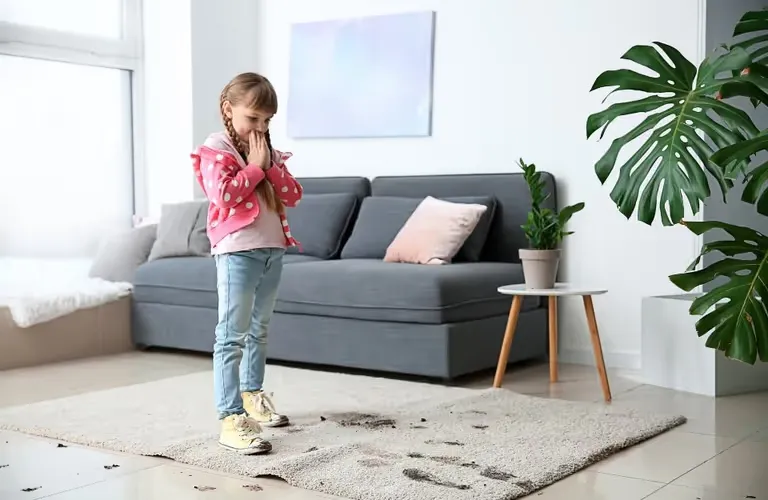
You reduce dust in a house by cutting what creates it and removing what settles, rather than pushing it from one surface to another. Most household dust is made indoors — shed skin, fabric fibers, pet dander and soil tracked in on shoes. Sealed-HEPA vacuuming, damp microfiber and a clean furnace filter do most of the work.
That is the short answer. The longer one is worth reading, because most dusting routines fail for the same two reasons: dry cloths, and the wrong order.
Where does dust in the house come from?
A closed house still makes its own dust: people and pets shed skin and hair, fabrics shed fiber, and outdoor soil arrives on shoes, clothing and through the heating system. The detail sits in our guide to where dust comes from in a closed house.
Why is there so much dust in my house?
The dust is being moved around rather than removed, and the house is producing more of it than the routine is taking out. The detail sits in our guide to why some houses make far more dust than others.
Where does dust come from in a closed house?
Skin, hair, textile fiber, paper fiber and tracked-in soil account for most of it, and a closed house still exchanges air with outside. We work through it in our guide to what household dust is actually made of.
How do you get rid of dust in the house?
Remove dust in a fixed order — high to low, dry before wet, floors last — so nothing you disturb lands on a surface you have already finished. Order matters more than product. A room cleaned bottom-up has to be cleaned twice, and most people give up before the second pass.
The method Happy Maids works from is not complicated, and it transfers to your own routine.
- Start at the top. Light fixtures, fan blades, the tops of door frames and cabinets, then shelves, then the furniture underneath them. Switch the power off at the wall before you damp-wipe a fixture or a fan blade.
- Use damp microfiber, not a duster. Damp cloth holds the dust and carries it out of the house. Dry cloth relocates it.
- Use a fresh side of the cloth often. A loaded cloth stops picking anything up and starts smearing.
- Vacuum before you mop, and vacuum with a sealed machine. Edges, corners and along the baseboards, not just the open middle of the floor.
- Mop last, in detail. Into the corners, along the edges and into the toe kick under the kitchen cabinets, where fine dust collects out of sight. On wood, check that the floor is sealed and mop damp rather than wet — standing water on an unsealed or waxed floor does real damage.
- Wash the bedding weekly. Shed skin is a large share of household dust and most of it is shed in bed.
Happy Maids vacuums with sealed-HEPA SEBO machines and cleans with color-coded microfiber, so kitchen and bathroom cloths never mix. The full task list, room by room, is on the house cleaning checklist.
How often should you dust your house?
Weekly dusting suits bedrooms and living rooms, but trim that has never been washed will only smear — it needs washing once before a dusting will hold it. The detail sits in our guide to how often each surface in a house needs dusting.
Do air purifiers really get rid of dust?
They capture what is still in the air and nothing that has settled, which is why an air purifier lowers how much lands but never lets you dust less often. The detail sits in our guide to do air purifiers reduce dust in a house.
How do you get rid of dust floating in the air?
Airborne dust stays up because something keeps stirring it — dry dusting, a leaky vacuum, a loaded furnace filter — so fix the source and the floating load drops on its own. The afternoon-sized fixes are laid out in how to get rid of dust floating in the air.
Why does dust get worse in an Illinois winter?
Winter combines three things that each raise dust: closed windows, constant forced-air heating and very dry indoor air. The furnace circulates the same air through the same rooms for months, the house is never flushed with outside air, and low humidity keeps fine particles airborne longer.
It is also the season when nobody wants to open a window, so the dust simply cycles. Changing the furnace filter on schedule is the single highest-value thing a homeowner can do between November and March, and it is genuinely your job rather than a cleaning service's.
This is why spring cleaning exists. After a winter of closed windows, it is usually the dust you cannot see — on trim, blinds, the tops of doors and inside fabric — that has accumulated, and that is what a deep clean is for.
Why is there so much dust after a remodel?
Construction dust is a different substance from household dust and it behaves differently. Drywall dust is extremely fine and it keeps resurfacing for weeks, because it settles into carpet, upholstery, ductwork and every ledge in the house, then works loose again as people move through the rooms.
It also cannot be dry-swept without going straight back into the air. It has to be vacuumed with a sealed machine, then wiped with damp cloths, then usually done again a few days later once more has settled out.
Happy Maids handles this as a separate service — see post-remodeling cleaning. Two honest limits: the contractor has to have broom-swept and hauled the debris away before we start, and Happy Maids does not wash walls or ceilings.
Can a cleaning service actually keep the dust down?
Yes, for the part of the problem that is removal — and no service can change what your house is made of. A cleaning service controls method and consistency. Humidity, furnace filters, carpet and how much fabric you own stay with you, and together those decide the ceiling on how clean the air gets.
What Happy Maids brings to every visit:
- Sealed-HEPA SEBO vacuums — the dust leaves the house instead of being redistributed through the machine.
- Color-coded microfiber, worked damp, so dust is carried out rather than lifted into the air.
- Top-down order, floors last, every room, every time.
- Green, kid- and pet-safe products as the default on every visit. They are not an upsell and never have been.
- W-2 employees who are background-checked, bonded and insured — the same familiar team whenever scheduling allows, not a different crew each visit.
Where the limits are, plainly. Happy Maids works from a two-step ladder and no higher, so a fixture hanging in a two-story foyer needs a specialist with the right ladder, and that is not us. Chandelier cleaning is excluded either way. On the heating system, we clean the grilles, registers and return covers we can reach — dusted on a recurring visit, hand-washed on a deep clean — so the system stops pushing that dust back into the room, while dust inside the duct work itself is a duct-cleaning contractor's job, not ours. We do not do carpet or steam cleaning, and floors are mopped in detail, edges and corners included.
If the house has not been cleaned properly in a year or more, start with one deep clean and then keep it there. Dust sticks to a film, and a film has to be washed off once before dusting can hold. What that visit costs is set by square footage, how many bathrooms there are, the condition the house is in and how often we come, so the fastest route to a real number is a two-minute call on 847-382-0082. We answer the phone in Lake Barrington, Monday to Friday, 8:30am to 4:30pm, and the room-by-room checklist sets out exactly what a visit covers.
If your symptoms are worse in bed and on waking rather than worse when you dust, the problem may not be dust at all — read what actually kills dust mites, and how to tell whether you have them. And if you want to know whether we cover your town, the service areas map lists every community we clean in the Northwest suburbs.
Frequently asked questions
What causes excessive dust in the house?
Excessive dust nearly always traces to one of four things: a lot of fabric, forced-air heating, an unsealed vacuum, or dry dusting. Carpet, upholstery and drapes act as reservoirs that release dust back into the room whenever they are disturbed.
Check the furnace filter first — a loaded filter stops removing particles while the blower keeps circulating them. Then check whether your vacuum is sealed, not just whether it has a HEPA filter.
How do you keep the dust down in your house between cleanings?
Four habits do most of the work, and none of them takes long.
- Shoes off at the door, with a mat outside and a mat inside.
- Wash bedding weekly — the bedroom is where most skin is shed.
- Change the furnace filter on schedule, especially through an Illinois winter.
- Wipe with damp microfiber rather than a dry cloth or a feather duster.
Thinning out open shelves and stacks of paper helps more than people expect, because dust needs surface area to sit on.
Should you dust or vacuum first?
Dust first, vacuum second. Dusting knocks particles down onto the floor, so vacuuming afterward picks them up instead of leaving them to resettle on the furniture you just finished.
The full order is high to low: fixtures and fan blades, then shelves and furniture, then floors vacuumed, then mopped last. Happy Maids works every room this way, and it is the reason a room stays clean-looking for longer.
Is a damp cloth better than a duster for dust?
Yes, and it is not close. A damp microfiber cloth holds dust and carries it out of the house. A feather duster and a dry rag lift it into the air, where it stays for a while and then lands on the same surfaces.
Use a fresh side of the cloth often. Once a cloth is loaded it stops collecting anything and starts leaving streaks.
Does washing bedding really reduce house dust?
It does, more than most people expect. Shed skin is one of the largest components of household dust, and the majority of it is shed in bed over eight hours a night.
Wash bedding weekly in hot water. Happy Maids can change the bed linens as an add-on to a visit, but the laundry itself is not something we do — that stays with you.
Does Happy Maids clean air ducts?
Not the duct work itself. We clean the grilles, registers and return covers we can reach — dusted on a recurring visit, hand-washed on a deep clean — so the system stops pushing that dust straight back into the room. Dust deep inside the duct work is a duct-cleaning contractor's job, not ours, and we will say so rather than take the work.
What we do control is what happens in the rooms: sealed-HEPA vacuuming, damp microfiber, and dusting worked top down. Changing the furnace and air conditioning filter on schedule is the homeowner's job and matters more than most people realize.
Does Happy Maids dust ceiling fans and the tops of high cabinets?
Yes, within reach of a two-step ladder. Fan blades, light fixtures, the tops of door frames and blinds are dusted on a recurring visit and hand-washed on a deep clean.
Above that we stop and say so. A fixture hanging in a two-story foyer needs a specialist with the right ladder, and that is not us. Chandelier cleaning is excluded from our services either way. The room-by-room checklist shows exactly where each line falls across recurring, deep and move-out cleaning.