
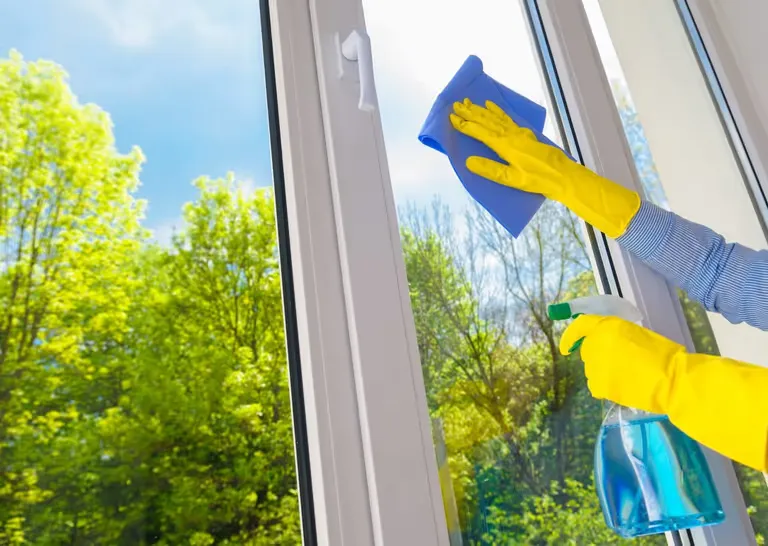
Dust properly and it stays gone noticeably longer. The two things that decide it are the order you work in — always high to low, so anything you dislodge lands on a surface you have not done yet — and whether the cloth actually traps the dust or just pushes it into the air to settle again.
Why is there so much dust in my house?
A home with more textiles, more traffic, forced-air heat and dry winter air makes noticeably more dust than an identical house next door. We work through it in our guide to where household dust actually comes from.
Where does dust in the house come from when the windows are shut?
In a closed house, dust comes almost entirely from what is already inside: people, pets, fabric and cooking. Nothing new blows in, but nothing leaves either, so the same particles are lifted, moved and resettled over and over by footsteps, forced-air heating and the act of dusting itself.
Illinois makes this worse than most places. From November to March the windows stay shut, the furnace runs, and the air is dry enough to keep fine particles airborne longer and to build static that makes dust cling to screens, blinds and baseboards. The EPA's guidance on indoor air recommends opening windows and doors when weather permits for exactly this reason, and for four months of the year that is not an option here.
This is also why a house looks worse in April than it did in January. Every dusting through the winter moved a share of the dust somewhere else rather than out of the building. Cobwebs in the ceiling corners are the visible record of it.
How do you reduce dust in the house?
Mats at every door, a better furnace filter, humidity in the 30 to 50 percent band, damp microfiber instead of a dry duster, and weekly laundering of bedding do most of the work. We work through it in our guide to the five steps that measurably reduce household dust.
How often should you dust your house?
Weekly in the lived-in rooms, monthly for blinds, vents, fan blades and the tops of door frames, and twice a year for the detailed work behind furniture. The full answer is in our guide to how often to dust, room by room.
What is the right way to dust so it does not settle straight back?
Work high to low, dry before wet, and floors last. Use a slightly damp microfiber cloth so the dust is captured in the cloth rather than pushed into the air, then rinse or replace the cloth as it loads up. A dry feather duster mostly relocates dust to the floor you already vacuumed.
Order matters more than product. Cobwebs and light fixtures first, then shelves and horizontal surfaces, then touch points like switch plates and door handles, then floors vacuumed and mopped at the end. Anything that falls during the earlier steps lands on a surface you have not finished yet.
A few things worth not doing, because they cause damage that does not come back off:
- Do not use a melamine sponge on gloss, semi-gloss or aged painted trim. It is a very fine abrasive. It removes the mark and the sheen together, leaving a dull patch that only repainting fixes.
- Do not damp-wipe paint that has not cured. Latex paint needs roughly two to four weeks after it looks dry before it will take cleaning. Newly painted trim gets dusted dry until then.
- Never mix bleach with ammonia. Many glass cleaners contain ammonia and many bathroom cleaners contain bleach. Together they produce a toxic gas, so use one, rinse, and ventilate before the other.
- Do not wet-mop unsealed, waxed or pre-polyurethane wood. Dust-mop or vacuum it instead, and keep water off it until it is sealed.
Where is the dust that most people miss?
The dust that keeps a room looking gray is usually on surfaces above eye level and below knee level, because those are the two zones nobody looks at. It builds slowly, then sheds back down onto the surfaces you clean weekly, which is why those surfaces seem to dust themselves overnight.
- Ceiling fan blades, and the top edge of each blade in particular
- The top ledge of every baseboard, and the top edge of door and window casings
- Return-air grilles and supply registers, which move air through dust all winter
- Blind slats, window sills and the track beneath them
- Lampshades, the tops of picture frames and the tops of upper cabinets
- Under beds, behind sofas, and the strip of floor just inside the front door
Do air purifiers really get rid of dust?
Portable air cleaners help in a closed bedroom and cannot reach anything that has already landed — the EPA is explicit that filtration does not replace controlling the source. We work through it in our guide to what an air purifier does and does not do about household dust.
What does a professional cleaning change about dust?
A professional visit changes the dust picture in two ways: the dust is removed from the building rather than moved around it, and the places that quietly reload the room get cleaned on a schedule instead of when someone notices. That is equipment and sequence more than effort.
Happy Maids has cleaned homes in Barrington and the surrounding suburbs since 1985, and the anti-dust part of the method is not complicated:
- Sealed-HEPA vacuums, so fines stay in the machine instead of returning to the room through the exhaust
- Color-coded microfiber, damp rather than dry, changed out as it loads — a cloth used in a bathroom cannot end up on a kitchen counter
- Cobwebs, vents and baseboards in every room on every visit, not occasionally, which is what stops the slow reload from above and below
- Top down and dry before wet, with floors vacuumed then mopped last
There is an order-of-operations point worth knowing before you book anything. You cannot dust a baseboard that was never washed, because the dust is stuck to a film and dusting only moves it around. That is why a deep cleaning visit usually comes first and hand-washes trim, doors, blinds and fixtures, after which ordinary recurring house cleaning holds it with a dusting. The full room-by-room list is published on our house cleaner checklist so you can see exactly which tasks fall where.
What will a cleaning service not do about dust?
A cleaning service will not solve dust that is coming from the building itself. Happy Maids does not wash walls or ceilings, does not clean chandeliers, does not work above a two-step ladder, and does not shampoo or steam-clean carpet. Those are published limits rather than judgment calls made on the day.
If the dust is heavy and gritty and returns within a day or two, the cause is usually mechanical rather than domestic: leaking ductwork pulling from an attic or crawlspace, a filter slot that does not seal, deteriorating insulation, or drywall dust left behind after a remodel. An HVAC contractor is the right call for the first three. The last one is a post-remodeling cleaning job, and it is a different job from a normal visit. Our full list of what we do and do not take on is on the policies page.
Where to start this week
Pick the bedroom. Strip and wash the bedding hot, vacuum the mattress and the floor under the bed with a sealed machine, damp-wipe the fan blades and the top of the baseboards, and check that the humidity sits between 30 and 50 percent. One room done properly will tell you more in a week than a whole house done lightly.
If you would rather hand the reload back to someone else, Happy Maids cleans homes across Barrington and the northwest suburbs, and a person in our Lake Barrington office answers the phone. Call or text 847-382-0082 for a free estimate, with no obligation. If you are building a routine of your own instead, our guide to how often to clean what, on a daily, weekly and monthly schedule sets out the rhythm, and the spring cleaning checklist covers the once-a-year items.
Frequently asked questions
Why do I have so much dust in my house even after cleaning?
Because most of it is generated inside the house rather than blown in, and because dry dusting relocates it instead of removing it. Skin, textile fiber and cooking film are produced continuously by ordinary living. Use a damp microfiber cloth, work high to low, and vacuum with a sealed machine so the fines leave the building rather than settling somewhere else.
Where does dust come from in a closed house?
From the people, pets, fabric and cooking already inside it. With the windows shut nothing new enters, but nothing leaves either, so the same particles are lifted and resettled by footsteps, forced-air heating and dusting itself. That is why an Illinois home looks dustiest in early spring after four months closed up.
How often should you dust your house?
Weekly for the rooms you live in, and the bedrooms without exception, since that is where you spend eight hours a night close to the surfaces. Guest rooms, formal dining rooms and finished basements are fine every two to four weeks. Ceiling fans, vents, blinds and the tops of door casings need a pass roughly monthly.
Do air purifiers really get rid of dust?
They capture fine particles floating in the room they are in, which can help an allergy sufferer sleep better. They do nothing about dust already on a surface, ground into carpet, or inside a mattress. Treat a purifier as an addition to source control, not a substitute for laundering bedding and vacuuming with sealed filtration.
What kills dust mites, and does spraying anything work?
Heat and laundering, plus keeping indoor humidity between 30 and 50 percent. There is no spray that reliably removes them from inside a mattress or stuffing, and the allergen people react to is the waste, which stays behind either way. The Asthma and Allergy Foundation of America says a home cannot be rid of them entirely.
How do you get rid of dust floating in the air?
Stop putting it there — damp dusting, a sealed-filtration vacuum and a fresh furnace filter cut the airborne load at its source; getting rid of dust floating in the air walks through the rest.
How do you reduce dust in the house without buying anything?
Take shoes off at the door, wash bedding weekly on the hottest safe setting, keep the daily reset short so surfaces stay clear enough to wipe, and dust with a damp cloth working high to low with floors last. Those four cost nothing and account for most of the improvement people notice.
Does Happy Maids clean cobwebs, vents and baseboards on every visit?
Yes. Cobwebs in the ceiling corners, vents and registers, and baseboards are done in every room on every service rather than occasionally. On a recurring visit they are dusted; on a deep clean they are hand-washed, along with trim, doors, blinds and window sills.