
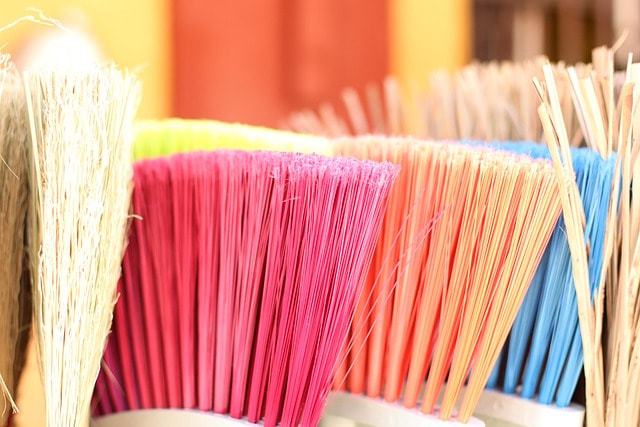
Dusting is the housework job people are least sure about. Nobody wonders whether the dishes need doing, but almost everyone has stood in a living room wondering whether the shelves genuinely need it again or whether they are being unreasonable.
How often should you dust your house?
Weekly in the lived-in rooms, monthly for blinds, vents, fan blades and the tops of door frames, and twice a year for the detailed work behind furniture. We work through it in our guide to how often to dust, room by room.
Why does dust come back so quickly?
Household dust arrives from two directions at once — skin cells, textile fibers shed by carpet and upholstery, pet dander and cooking residue from inside, and soil, pollen and grit tracked in on shoes from outside. Both run continuously, which is why a house shows dust again within a week no matter how well the last dusting went.
Forced-air heating makes it worse in a specific way that matters here, because almost every house in the Northwest suburbs has it. Every time the furnace cycles it moves the whole volume of air in the house past every surface, lifting settled dust and redepositing it somewhere else.
This is also why dust is worst in winter. Windows are shut, the furnace runs constantly, and the same particles circulate for months instead of leaving.
The EPA's position on indoor air is worth knowing because it reframes what dusting is for. Source control is the most effective way to improve indoor air quality — removing what produces the pollutant works better than filtering the air afterward. Dusting properly is source control. An air purifier running in a room full of settled dust is not.
What is the right way to dust so it stays gone?
Use a slightly damp microfiber cloth, work high to low, and vacuum the floors last. A dry cloth or a feather duster pushes a large share of the dust into the air, where it settles again within the hour. Damp microfiber traps it and carries it out of the room, which is the entire point.
The order matters as much as the tool. Happy Maids works top down and dry before wet in every room for one reason: whatever you disturb falls, and it should only ever fall onto something you have not done yet.
- Ceiling corners, vents and fixtures first, then fan blades, then shelves and high furniture
- Then the surfaces at hand height — counters, tables, sills, touch points
- Then the low work — baseboards, chair legs, stair spindles
- Floors last, vacuumed with a sealed-HEPA machine, then mopped where the floor is hard
Two cautions worth having before you start. Silicone-based aerosol furniture sprays leave a film that attracts dust faster than a bare surface does, so the second week after using one is worse than the first — plain damp microfiber on wood, and a wood cleaner only when the wood actually needs feeding. And a vacuum without sealed HEPA filtration returns the finest particles to the room through the exhaust, which is why a house can smell dusty right after being vacuumed.
How often should you clean baseboards?
Wash baseboards two or three times a year and dust them every time the room is cleaned; once the film is gone, a light dusting holds them. The full answer is in our guide to how often to clean baseboards.
What collects dust that people never think about?
The surfaces above eye level and below knee level are the ones that get missed, because dusting is mostly done at the height of a coffee table. These are the places our teams find the heaviest buildup in homes that are otherwise well kept.
- The tops of door casings and interior doors — a visible mat of felt builds there within a year
- Ceiling fan blades, upper surface, which then rains down the moment the fan starts
- Cold air return grilles, which pull dust toward them all day by design
- Stair spindles and handrails, dusted one spindle at a time or not at all
- Lampshades, especially fabric ones, which hold dust the way a filter does
- The tops of upper kitchen cabinets, where dust mixes with airborne cooking grease into a film that needs washing, not dusting
- Behind and beneath the bed, which in a bedroom is the largest dust reservoir in the room
How often should you deep clean your house?
Twice a year suits most homes on a recurring schedule, and three or four times a year if nobody is cleaning in between. The full answer is in our guide to how often to deep clean your house.
Does dusting more often actually help allergies?
Yes, if it is done with damp microfiber and a HEPA vacuum rather than a dry cloth. The Asthma and Allergy Foundation of America recommends vacuuming weekly with a HEPA-filter machine and washing sheets, blankets and throw rugs weekly in hot water, at 130 degrees or above, and keeping indoor humidity between 30 and 50 percent.
Their full dust mite allergy guidance is worth reading if anyone in your house wakes up congested, because the bedroom is where the fix lives — mattress and pillow covers, weekly hot washes, and fewer fabrics that cannot be washed. AAFA also suggests, plainly, that the person with the allergy should not be the one doing the dusting, and should wear an N95 mask if they must.
That last recommendation is the reason a meaningful share of our clients hired a cleaning service in the first place. It is difficult to follow your allergist's advice about weekly dusting when weekly dusting is what sets you off.
When is dusting a job worth handing over?
Hand it over when the monthly list is the part that never happens. Almost everyone keeps up with the weekly surfaces eventually. It is the baseboards, blinds, fan blades, vents, sills and door frames that quietly go a year, and those are precisely the surfaces that make a house feel dusty without anyone being able to say why.
On a Happy Maids visit, cobwebs, vents and baseboards are done in every room on every service, not on a rotation and not on request. Dusting is worked high to low, the vacuums are sealed-HEPA so they hold what they lift, and the microfiber is color-coded so a cloth used in a bathroom cannot end up on a kitchen counter. Our cleaners are W-2 employees — background-checked, bonded and insured, never gig labor.
We are equally clear about the limits, because it saves everyone a disappointing Tuesday. Nothing above the second step of a step ladder, which means a fixture hanging in a two-story foyer needs a specialist with the right equipment. No chandeliers, no washing walls or ceilings, no exterior windows, and no carpet shampooing or steam cleaning. The whole list is published on our policies page rather than discovered on the day.
Who does this near you?
Happy Maids has cleaned homes across Barrington, Lake Barrington, Inverness, Deer Park, Kildeer, Hawthorn Woods, Lake Zurich, Palatine and the surrounding towns since 1985. The full list is on our service areas page, and what past clients actually said is on our reviews page.
If you want the frequency question answered for your specific house rather than in general, weekly, every two weeks or monthly works through how to choose, and our daily, weekly and monthly cleaning schedule sets out what to do between visits.
Or call or text 847-382-0082 and talk to a person in our Lake Barrington office. An estimate is free, takes a few minutes, and comes with no obligation attached to it.
Frequently asked questions
How often should you dust your house?
Dust the surfaces you see and touch weekly, and the ones you do not — baseboards, blinds, fan blades, vents, sills and door frames — monthly. Dust is visible again on a flat surface within about a week in an ordinary home, which is why dusting every two weeks always feels like it is losing.
How often should you clean baseboards?
Wipe baseboards monthly with a damp microfiber cloth along the top edge, and wash the face and shoe molding properly two to four times a year. Happy Maids dusts baseboards in every room on every visit and hand-washes them on a deep clean, which is the difference between the two standards.
How often should you deep clean your house?
Twice a year for most homes, up to four times with children, pets or heavy daily cooking. A deep clean is the same rooms as a regular clean held to a different standard — baseboards, trim, doors, blinds and fixtures hand-washed rather than dusted, and showers given a far longer scrub.
Should you dust before or after vacuuming?
Dust first, vacuum last. Whatever you disturb while dusting falls to the floor, so vacuuming first means doing it twice. Happy Maids works top down and dry before wet in every room for exactly this reason, with floors as the final job.
Is a microfiber cloth better than a feather duster?
Yes, and it is not close. A feather duster and a dry cloth push a large share of the dust into the air, where it settles again within the hour. A slightly damp microfiber cloth traps the dust and carries it out of the room, which is what dusting is supposed to achieve.
How often should you dust if you have pets?
Hold the weekly line strictly and move the monthly list to every two weeks. Dander and hair settle heaviest on fan blades, vents, baseboards and under furniture. Vacuum weekly with a sealed-HEPA machine so the finest particles are held rather than blown back into the room.
Can dusting make allergies worse?
It can, if it is done dry. The Asthma and Allergy Foundation of America suggests that someone without the allergy do the dusting, and that anyone who must do it themselves wear an N95 mask. Damp microfiber and a HEPA vacuum keep far more of it out of the air than a dry cloth does.